Blog Archive

Wednesday, 7 June 2017

We are better when we stand together - the EU is part of the solution


UPDATE: Samit is organising two more rallies this September. (A link to his website can be found at the bottom of this article):


On June 3 2017 a pro-European Union rally was held in Brussels. Gemma, a speaker, addressed the rally:

Hello fellow Europeans!

I am here today representing the 48% and Beyond. The group was set up a year ago by EP Ward for a few friends. He didn’t realise a few meant 60 thousand. And counting.

The 48 and Beyond is not affiliated to any greater national movement. We ARE, in fact – a national movement!

The group has supported various initiatives and provides a sparking ground for ideas.

• More than 650 local groups

• 4 marches, from London through to Edinburgh

• Lobbying Parliament and the House of Lords in the run up to Article 50 by RepresentUs.

• The “Mildly Subversive” fringe EU flag Mafia who have made flag bombing a thing

• The Richmond Vigil, which takes our voices to Parliament three times a week.

• And thanks to Samit, we have come to Brussels to let them know That Remainers will not give up!

This is not an exhaustive list. Everything we have done, has been done by ordinary people. People like you and me.

Not the rich.

Not the elite.

Not the famous.

People are campaigning every weekend to fight this. And we will get there! If the referendum has taught us one thing, it has been if you want to get something done, you cannot leave it to the politicians!

Leave won the referendum and in doing so managed to derail the country. They only managed this through excluding of 5 million people from voting. They only managed it by lying. But, ladies and gentlemen, they spectacularly lost the debate.

Have you met one leaver who can give you a positive and workable version of the future available to the UK outside the EU? Have you found one person who could give you one good and valid reason to justify

• walking away from a project that has helped shore up 72 years of peace,

• that has brought continuing prosperity,

• that has given us access to the world’s largest single market

• which has provided us with the right to work, live and love in 27 other countries,

• given us access to specialised health care abroad and allowed many to settle in the sun to enjoy their retirement?

• How many people on this planet can boast that they have at least two citizenships to protect their rights?

We are here, because the face of the UK is one that many of us no longer recognise. We are here, because we have the feeling that the UK has gone off the rails.

The majority of our press incites hatred towards anyone who does not agree with their narrow definition of jingoistic nationalism.

Our politicians pander to hate while their policies drive division further into our society.

Our country is 1.5 trillion in debt. The value of wages has declined by 10,5% since 2007.

This is the result of TORY austerity. Not the EU. The Tories.

The UK has problems. It has valid problems. But the punch it swung on the 23rd of June 2016 was misdirected. Instead of hitting the EU, we should have gone for the Conservative government.

A Tory majority will not get May a strong hand at the negotiating table in Brussels. Even if 650 seats went to the Tories – the UK is still one country. Facing a Europe which has never been stronger, more stable or more united in its purpose.

And despite the predictions of leave and the wishful thinking of Farage, the EU is far from falling apart. Those regressive forces that want to take us back to the era of the nation state have failed – Austria, The Netherlands, France – all stated at the ballot box that a departure from the EU is not for them after taking one look at the madness that has taken hold of 27% of the UK population.

The 48 and Beyond is a growing movement, and as the clouds grow darker, the UK will need us to keep the light shining.

We know that the EU is NOT the cause of the problems our country faces, but part of the solution

We are better when we stand together.

So what are our challenges for the future?

1. We need to speak out – to make sure those who have honoured our country by choosing the UK as their home – our husbands and wives, daughters and son in laws, neighbours, friends and colleagues – we need to let them know they are part of what makes the UK what the UK is – vibrant, innovative, international.

2. We need to make sure that over the coming months and years the blame for the debacle that is coming towards us as surely as the titanic met the iceberg – we need to make sure that we lay the blame for that squarely at the feet of those politicians and pundits who have deceived the public. May, Farage, Cameron and Boris, to name but a few.

3. We need to remind our fellow Europeans that the other UK, the open, pragmatic, humorous and humane, progressive and positive UK is still there. And that we want to be part of driving this Union forwards. There is so much we can do together for this world.

4. And we need to educate and inform. To be ambassadors for the EU. To make sure that people know the history of this place. That it was created to ensure peace, prosperity, progress. That while it may not be perfect, it is good. And it is the best we have.

Like any country, the UK has its demons to deal with. And we will deal with these demons. Because, Ladies and Gentlemen, we are Europeans. We are Brits. And we are patriots.

And we will get our country back on track.


Gemma and Samit are just two members of the Facebook group The 48%. Gemma was a speaker and the rally was organised by Samit, who is also the founder of EUNITE.

Tuesday, 6 June 2017

Maintaining our Freedoms, Safety and Rights


Ahead of the coming UK General Election, Republic of Ireland and British citizens, living both in the UK and other EU countries, aged from 26 across the whole range to 77, express why they want to remain European Union citizens.

I bought into the idea of common identity, history, values and culture right from 1973. - John, Irish, living in UK.

I want to remain an EU citizen because this is a crucial and opportune time for citizens' action to transform the European Union in a democratic direction. – Gerald, British, living in England.

The European Union gives us economic stability/transparency, national/international security through shared EU intelligence and equal rights for all EU citizens. It maintains and improves the high standards of living in expected from first world nations, has media transparency/accountability and accessibility for all EU citizens to higher levels of Justice. The EU provides an international collective voice of reason which has evolved over decades to guide member nations whilst setting an example to the world for negotiating a more civilised transition through the current turbulence in an ever increasing unstable globalised/insular world, assurance that the freedoms which have been gained and fought/campaigned for over 70 years will remain intact, and collective strength to empower member nations to resist the  detrimental influences of other world regimes.  - Jan Paul, British, living in the Netherlands.

I want to remain an EU citizen because I want to keep my right to live in other European countries. - Matt, British, living in France.

I want to remain an EU citizen because I AM a 'European Citizen' and I am staying that way!  - Mick, British, living in Germany.

I want to remain an EU citizen because I am an European, and I am never going to give up my right to Freedom of Movement.  - Chiara-Etsuko, British, living in Italy.

I live with my husband in a small town on the Costa Blanca.  My husband had been a self- employed builder in the UK but had to stop working because of health issues. He has received amazing care here and has been given drugs which he was told in the UK were not available to him. We sold our house in the UK a couple of years ago. We were devastated and also angry with the result of the referendum because we are now fully integrated Europeans. – Pam, British, living in Spain.

I want to retain the freedom to live, work or retire anywhere in the EU member states. – Adam, British, living in the Netherlands.

'Living in Europe meant, up until June 24th 2016, that I was a member of a massive, chaotic, cacophonic, creative, colourful community. -  Gemma, British, living in Germany.

I want to remain an EU citizen because I wish to remain living and working in Europe, to be able to move freely between one European country and the other. I can find no advantage in leaving the European Union. Because I have been living longer than 15 years outside the UK, I was denied a vote in the Referendum and also will not be able to vote in the coming election. - Caroline, British, living in the Netherlands.

I'm Kentish! I want to stay as this is my home my life I have nothing to return to UK for! Whatever I'm staying even if have to sell home and live in camper van! – Pam, British, living in France.

It's important to work together to resolve shared problems and achieve shared goals. Britain brings a sense of commercial liberalism to Europe whilst Europe teaches Britain the art of realpolitik compromise. Both are only possible when we all recognise and understand our respective cultural identities and are working together in the same institutions. – a British citizen, living in the UK.

Thank you to members of the Facebook groups Campaign for Europe, Europeans, Brits Abroad against Brexit and The European Party for their contributions and making this piece possible.

Friday, 2 June 2017

Breaks-it and a victory toast for the UK?


This article was first written shortly after the UK referendum.


My brexfast was not very palatable; my toasted Dutch bread topped with Danish butter and washed down with Spanish orange juice stuck in my throat.
My own countrymen had voted against me, my child, my grandchildren and generations beyond. At best, on a personal level, I felt abandoned by my country of birth; at worst, on a global level, currencies were unstable and stocks and shares were crashing, without having yet fully recovered from the global crash of 2008.  Whilst ‘Brexiteers’, (as former UK Liberal MP Lord Ashdown, likes to call them; and he did feel for his country on that dark night) were toasting their victory; others were ‘counting the cost’ – not just financially and not just for the EU, but for the state of the Union that had existed  between England, Scotland and Wales (Northern Ireland is an even more complex and fragile issue beyond the remit of this article and that county of the UK was also mostly dismayed by the result) for almost 310 years….England voted ‘leave’… England ‘breaks-it’.
What a breakfast for me and tens of millions of others…… Then I started to ask myself: Why did the government call a referendum whilst the country was still reeling from the ‘shocks’ of recession and why call it on that date this year?  ‘Conspiracy theories’ notwithstanding,  and not wanting to blame the current cabinet solely, as it takes a whole government to make such a decision, not just the Prime Minister or the Members of Parliament of the party ‘in power’, maybe it was simply due to a lack of systems thinking?
The United Kingdom’s vote to leave the European Union is not as simple as it may seem – 52% versus 48% is not the whole story; nothing ever is. In the lands of ‘perfect economic theory‘ and ‘complete information’ maybe so, but who lives there? I don’t live on that planet and, I suspect, neither do you.

Of the estimated 65 million residents (of all ages) and estimated 2.6 million adult UK passport holders not resident in the UK – so a total of, perhaps 67.2 million people - only 17.4 million voters exercised their ‘majority’ opinion for the UK to leave the EU. The total of all those who were permitted to register to vote was about 46.5 million. In so as far as ‘the electorate’ is concerned this works out as approximately: 37% ‘leave’, 34% ‘remain’ and 28% ’abstention’ (i.e. non-voters).  I have written ‘estimated’ in italics because that is exactly what it is; unlike some countries in the EU, the UK government has no registration scheme for either its residents or for its citizens who live outside the UK. The number of resident and non-resident citizens are always a ‘guessing game’ for the UK until a census is appropriated, which is only once every decade and only ‘counts’ those resident in the UK on that specific date.
In the Netherlands, for example, each resident is required to ‘register’ their address with the Local Authority where they live using the ‘tax/social number’ (BSN) they were given at birth or when they first became resident in the Netherlands. Big Brother? In my experience, and that of my friends, who are of many nationalities, absolutely not! It helps to streamline ‘Government systems’ by linking each Government department together via the one number per citizen. In the UK we were given a National Health Service number at birth and a different National Insurance at around the age of 15 or so.  Some can remember and recite their National Insurance number verbatim, as it is needed for work and taxes, but practically no-one know their National Health Service number. A child’s National Health Service number used to be (and may still be) on the documents that any UK parent has when claiming child benefit (which is available to all at the present time). But nobody ever knows their National Health Service number.

Getting a bit closer back to the point: the Netherlands’ Government do not need to spend huge amounts of money every ten years to carry out a census because they already know. The Netherlands’ Government do not need to spend huge amounts of money to ask people to fill out forms and them post back, or go online, to tell the Government if they want to vote because they already know who of which nationality is allowed to vote in which Dutch elections. Dutch citizens just go to their town hall to renew their passports…. It’s so much easier for the citizen and cheaper for the Government. The Dutch system is not perfect, but at least there seems to be some sort of system that ‘attempts to look at the whole’ within the ‘boundary’ of their sovereignty and does not always allow each government department to act independently, flail around in the dark and then blame another department, or an MP, when money is wasted or if everything goes wrong.
Any person who likes to ‘analyse systems within a boundary constraint’ could probably see that the UK EU referendum was heading for a ‘big fall’ even before the first vote was cast. It was a ‘wicked problem’ even before the 23rd of June.

Less than two years beforehand, the Scottish people had applied their referendum rights to say that they wanted to continue the union with England, Wales and Northern Ireland. Some may be regretting that now and, indeed, Scotland seems to be in the process of mandating a further vote on the very same issue as soon as they can; they are also ‘in talks’ with the Republic of Ireland, who are not only EU but also have the Euro as their currency.

Did Westminster not think to analyse potential ‘systems dynamics’, to see either good or ill, when bringing forth the referendum? Were politicians, and their advisors, unware of strategic options development in the analysis of problematic situations? Or did their own greed for power make them totally blinkered to any scenario that was not good for them personally; and to hell with the country they are supposed to serve?
The first thing I take issue with, as a ‘systems thinker’, is the structure and rules of the ‘referendum voting process’ which I feel was flawed. Surely, a ‘safeguard’ should have been put into place that any decision considered (or enacted) by government had to be from a majority vote? After all, this is what usually happens in the UK House of Commons when MPs are considering and enacting legislature on their country’s behalf. Given the question ‘Should the UK leave the European Union’ 37% ‘Ayes’, 34% ‘Nays’ and 28% ’Abstentions’ would probably have never have got further than the Commons and, if so, would have fallen flat on its face in The Lords, with little debate, because the Commons had been unable to agree. The Queen would not even have known, let alone ‘rubber-stamped it’. Her Majesty, rightly so, tends not to opine on issues of even much less gravity than the EU referendum…. despite what some popular UK tabloids may say.

Without such a safeguard as a ‘majority vote’ written into the referendum rules, just one person could have swung the vote between ‘leave’ and ‘remain’.  On watching the results come in live on TV, I noticed that many of the declaring officers said that some ballot papers had been discounted from the vote because both the ‘leave’ and ‘remain’ boxes had been crossed. This may have only counted for a few thousand ballots, but does that not in some way signal the confusion of those who actually turned out to vote? Were the 28% ‘abstainers’ even more confused by what is, after all, an incredibly complex, multi-disciplinary issue that not even one highly-trained expert could analyse solo?  Was the actual question or statement upon which to vote flawed?

Psychologists seem to know that if people are asked ‘Do you prefer hot milk?’ most will say ‘yes’; the same people if asked ‘Do you prefer cold milk?’ most will say ‘yes’; But asked ‘Do you prefer hot or cold milk?’ the responses are likely to be ‘hot’ and ‘cold’ in relatively equal measure with a fair dose of ‘I don’t know’ mixed in. ‘I don’t know’ was not an option on the ballot paper. The only way to say ‘I don’t know’ was simply by not voting; thus leaving the on-the-fence citizens completely out of the picture and creating a calamitous two-horse race with a calamitous outcome that would have dissatisfied and disillusioned a great deal of the UK population no matter what the outcome had been.
Although this referendum was only, so-to-speak, ‘an opinion poll’ of the eligible electorate and is not legally binding on the UK government, the government should have taken greater responsibility for any outcome and, ergo, the care of its citizens; no matter in which country they reside or what their vote may have been.  Rats are now deserting the proverbial sinking ships of whatever party they belong to; The buck is being passed faster than a hand-grenade with its pin removed; no MP wants it to go off in their face; no MP of any party wants to even hold the poisoned chalice that is the result of ‘the 2016 UK referendum’ let alone sip from it. Ultimately, Westminster and Whitehall will admonish the proletariat; they believed the rhetoric; they cast the votes.
Social learning is ‘a many splendored thing’; it slowly taught the public about animal welfare, pollution, carbon emissions, organic farming and ‘Fair Trade’. But this time social learning was a big, two-pronged failure:
First, the tabloids, prominent speakers, MPs  et al had their influence on ‘the eligible electorate’ . It was as subtle as using a sledge hammer to crack a walnut and pretty much everybody could see it. But did the UK Government, and its advisors, think systemically about more understated forms of social learning that could have influenced an individual’s vote?

2016 was the year of not only Wimbledon and Le Tour de France, but also of Euro 2016 football, 2016 Olympics and Queen Elizabeth’s 90th birthday. 2016 could be seen as the most influential year, in many decades, to ‘national pride’ in the UK. So why not hold the referendum in spring 2017? Maybe government preferred to hold a vote shortly before the summer recess so that MPs could thence pretend to have ‘private discussions’ with other parties, whilst in reality making a hasty retreat to their holiday homes in the EU or in British overseas territory tax havens; no thought to the police force who cannot sip fizz and bask in the sun, even if they could afford to, because all merry hell seems to be about to break loose on the streets of Blighty.

Second, the repetitive use of a ‘phrase’ or ‘mantra’ can sway any person’s opinion. Systems Thinkers try to ensure that they are aware of their own innate biases before embarking on a project; every breathing entity on our earth has them in one way or another. It is, frankly, the way any individual species manages to survive. But bias is not always innate and is often learnt. The UK media picked up the latest portmanteau buzz-word called ‘Brexit’. Even good old ‘Auntie Beeb’ bandied it about with merry abandon both verbally and in written captions. For a supposedly neutral public service provider this could have been seen as reckless….. considering that it obviously contained the word ‘EXIT’.
The ‘wicked problem’ of a referendum now seems to have turned into  the reality of ‘an almighty mess’. Could this have been, at least in part, avoided if systemic thinking had been brought into play before ‘referendum day’? I shall not be toasting the result myself, because for either outcome the whole scheme lacked thought and planning from outset to, what might be a very final, bitter, conclusion. Maybe I’ll have either hot or cold milk tomorrow for breakfast, instead of toast…..

This video is an initiative of students of all European nationalities, studying together at the College of Europe in Belgium.


Sarah is a member of Campaign for Europe, keen EU supporter and 'systems thinker'. She is British and currently resident in the Netherlands.

Tuesday, 23 May 2017

Against HATE


19 June 2017

Campaign for Europe condemns 'hate crimes' of any type,
against any persons for any reason.


22 May 2017
3 June 2017


Friday, 19 May 2017

Following Erasmus


Erasmus was a Dutch-born scholar and philosopher who studied and worked all over Europe. He was against the tendency of some to lay down principles as undeniably true, without consideration of evidence or the opinions of others. In the ‘spirit’ of free- thinking and international cooperation, the Erasmus Scheme was founded 30 years ago this year. It has allowed students from many European Union member states (and also some from outside the EU) to follow ‘in the footsteps’ of Erasmus by gaining not only academic but also cultural and social learning in a country other than that of their birth or usual residence.


The Erasmus Programme (now known as Erasmus+) facilitates international study, work and training for students across the European Union by providing funding to students. For some, an ‘Erasmus semester or year’ is voluntary as part of their Bachelors or Masters programme and many appreciate the benefits it can bring to them in ‘rounding’ their studies and outlook on life. An ‘Erasmus year’ is mandatory for most British students studying European languages in the UK and, as a languages undergraduate, I had the chance to take part in it. As my degree was in three languages, which were equally weighted, I was lucky enough to complete three Erasmus placements, which I shall detail below.


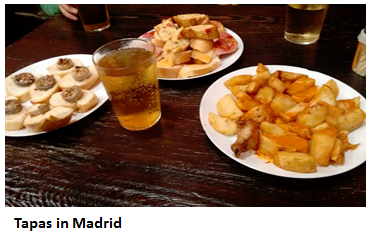
I started my Erasmus year by spending the first semester studying in Madrid, Spain. This was a fantastic experience, not only because of the fact that Madrid is an amazing city to live in, but also because the university I went to, Universidad Antonio de Nebrija, offered small classes; so I really got to know my classmates and teachers. Furthermore, as all my classes, apart from my ‘Spanish as a Foreign Language’ course, were with Spanish students, I got to experience the Spanish higher education system first hand. My major subject whilst in Spain was translation.


Next, I spent the second semester in Toulouse, France. This
was also a great experience because there I mostly took ‘French as a Foreign Language’ classes with other international students. This meant that I got to meet people from all over the world. In addition, I took translation classes with French students.


Finally, I completed an internship in Germany, working as an in-house translator and proof-reader for a famous car manufacturer. This was a fantastic opportunity because I could use my knowledge, gained through my translation classes in the UK and abroad, in a professional context. I mastered translation tools, which I originally learnt how to use in Spain, and got to see if translation really is a career option for me (and it is!). Moreover, in my spare time, I visited several cities in Germany, which allowed me to experience different parts of the country.


Finishing my Erasmus year was quite a sad moment for me. Within one year, I had lived in three countries, switched between three languages, and immersed myself in three cultures. Even though I was already an independent person before embarking on my year abroad,
Erasmus allowed me to grow even more because I found myself in new situations in quite different places. It also made me feel even more European as it was a real ‘European’ experience.
Trying to find exchange programmes on your own, or even through the Erasmus Mundus scheme, can be difficult and costly. Furthermore, generations of British students could lose out on this amazing opportunity which brings with it so many advantages. I am therefore saddened by the potential bar on British students taking part in the Erasmus+ programme. I honestly believe that my Erasmus year was the best of my life and it genuinely helped me grow as a person.


Matt is a UK citizen, currently living in France, who works as an ‘English as a Foreign Language’ and Translation teacher.  

Although he believes that the EU does need to be reformed, he fully supports it and does not want to see the UK leave the Union. He is very passionate about the Erasmus Programme and does not want future generations of British students to be deprived of this wonderful opportunity to study and work in other EU countries as part of their degrees.  

Matt’s qualifications and experience can be seen on his LinkedIN  profile: Matt Higgins


More information about the Erasmus+ and Erasmus Mundus programmes can be found at:


Tuesday, 9 May 2017

Why we love the European Union


The graphic above was created several weeks ago by Campaign for Europe members. On Europe day, some decided to share what they love about the EU:

©       Peace, cooperation, freedom amongst diverse yet closely related neighbouring countries. Protection of the environment, food standards, employment rights, human rights. A sense of a progressive common purpose. Employment and education opportunities, scientific collaboration, legal convergence and cross-border legal certainty – Adam


©       Shared goals, integration, celebration of difference whilst supporting the whole, the Euro, the European Parliament, Schengen Zone, EHIC cards, Cornish Pasties, Champagne, Parma Ham, freedom of travel, freedom of thought. – Alistair


©       Living in Europe meant, up until June 24th 2016, that I was a member of a massive, chaotic, cacophonic, creative, colourful community. – Gemma


©       Europe has been and remains a major contributor to World peace and the UK are very lucky to be part of it – Peter


©       I love the EU because it promotes peace and cooperation between countries. On a personal level, I love the EU because it has enabled me to study and work abroad without visas through my freedom of movement rights which I treasure. The Erasmus programme provided me with invaluable academic, professional and life experiences and I want British students to continue benefiting from it for generations to come as EU citizens – Matt


©       I love the strong sense of shared cultural heritage. Be it the big events and philosophies that have influenced us all and shaped us both so differently and yet so undeniably European. Or the little ones like food and fairy tales that started somewhere but spread and became just a little more distinct with each local twist and interpretation, but remained recognisable and helped to unify when treaties could not. Europe offers a rich journey through commonality and differences, sometimes with easy acceptance, sometimes a little more challenging, but always worth it. Especially when you see young people, who compared to my generation have a distant relationship to WW I & II, embrace the core ideals of the EU. - Babette

Friday, 5 May 2017

Let Love Rule – Changing 'Little Britain'


Update:  Post- UK general election, non-partisan crusader Peter Cook continues to campaign for a peaceful, united Europe within which the UK is still a part.
He says that the UK has paid the EU approximately 30 pence a day, or half a Mars bar, for 70 years of peace, nearly 50% of UK trade and free and easy access to Europe. This will change under ‘Brexit’.

Peter has made a video about himself, the campaign and his views about the European Union; it’s well worth a watch all the way through (approx. 5 minutes). 


Peter’s interesting, original article about why the UK should not leave the EU is below; (there is a link at the end if you wish to support Peter’s campaign).


I have been deeply saddened by the ‘terrorist’ attacks in Europe and confess I don't understand what motivates people to do such things. When hate rules over love, we are in a very dangerous place in terms of hope for humanity.

Modern politics merely confirms my view that we need to unite the world through acts of kindness and love. True leaders do not bend backwards when confronted by people who seek to use the lowest forms of influence to make their point. Rather, they lean forward to set new standards of human behaviour.

What the world needs now is love and great leadership.


The politics of fear are a powerful driving force in the world of work. In politics, they have potentially even more damaging impacts. The UnHoly Trinity of Donald Trump, Theresa May and Nigel Farage exploited fear and uncertainty to make them electable. Such forces gain traction in hard times, when people are fearful for their jobs, the economy, their well-being, that of their children and so on. And early implication of our local elections in the UK is “Vote Conservative, Get UKIP”. If this is replicated in UK General Elections, we will complete our slow sleepwalk into Little Britain. I’m campaigning to stop our repeat performance of the 1933 eugenic and fascist movement that hit all of Europe and gripped Germany through its ‘strong and stable’ leader.


For some time now, we have been tormented with the circularity of the phrase "Brexit Means Brexit" by the UK Prime Minister. It continues to be meaningless and hopelessly ambiguous. Brexit is a classic "wicked problem", characterised by uncertainty over the destination and the means to reach the destination. Clearly the reductionism of this phrase makes it appealing at a superficial level in our Gutter Press but, on closer inspection, the phrase is content free. Nearly one year on and we have no idea whether we are having a clean Brexit, a Red, White and Blue Xenophobic  Brexit, Deal or No Deal and other vapid platitudes from Theresa May. To describe her as a ‘Strong and Stable’ leader only serves to emphasise the lack of ethical and authentic leadership at this point in our history. Wicked problems are not resolved by just "getting on with it" since we don't know what "it" is ... The smart leader pushes the STOP button and understands the problem before rushing to a superficial solution.

The sleepwalk into ‘Hardcore Brexit’ threatens us socially, technologically, economically, politically, legally and ethically. The UK faces an economy of zero hour contracts and low wages and is already seeing the first signs of this as inflation outpaces wage rises this year. Great Britain is also seeing the early signs of the breakup of the UK via Scotland’s desire to maintain EU membership, Northern Ireland’s precarious fall back into an era of sectarianism and Wales’s desire to become an independent nation.

In terms of the ability to be a technology leader, the quality of scientific research and the UK science base is also in jeopardy. There are early signs that UK scientists are being refused participation in European funded projects and current joint collaborations may be shelved. Despite assurances and sweeteners from the UK Government, to scientific communities about funding, the situation remains nuanced. At risk are some €75 billion of funding from Horizon 2020 programs. The Erasmus Scheme is also in doubt for UK students, meaning that our children will not be able to enjoy an
education in Europe.
Most organisational studies show that, sadly, history repeats itself. How then can we stop these dangerous developments, which have far too many echoes of 1930s xenophobia and 'nationalism'?  Thoughts and ideas please .... there is no time to delay ... What the world needs now is love and great leadership. Please support me on my ‘UK Question Time’ tour and let's make Britain a Great part of Europe again! 


Peter Cook is an author and Keynote speaker at The Academy of Rock and Human Dynamics .
He is a passionate supporter of a 'Strong and Stable' EU. Even though, like some UK citizens who voted to ‘leave’, he believes that there should be some reforms.
Peter is currently campaigning for the EU and ‘tactical voting’ through his Change Little Britain project. (Take a look at the slideshow!)